
Why is China Called “Zhongguo”?中国为什么叫“中国”?
Sat 18 Aug 2007Posted by Mr.WHAT under Chinese Characters
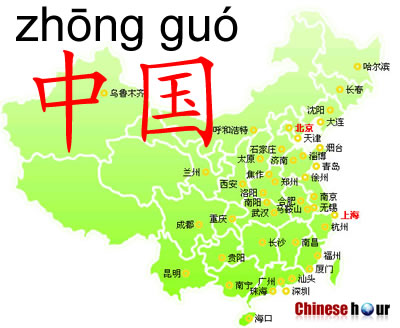 China - Zhongguo. China is called Zhongguo in Mandarin Chinese (Simplified: 中国, Traditional: 中國; also romanized as Jhongguo or Chung-kuo), which is usually translated as “Middle Kingdom”, but could also be translated as “Central State” or “Central Country”. One explanation, sometimes disputed, is that the Chinese regarded China as the centre of the civilised world , surrounded by barbarians.
Zhong (中) means “middle” or “center” while guo (国 or 國) means “country,” “kingdom,” “state,” or “land”, referring to the claim that China stood at the centre of that society’s “known world” .
______________________________
English and many other languages use various forms of the name “China” and the prefix “Sino-” or “Sin-”. These forms are thought to derive from the name of the Qin Dynasty that first unified the country (221-206 BCE) during which the Great Wall was built.”Qin” is pronounced as “Chin” which is considered the possible root of the word “China”.
______________________________
In modern China, the term Zhongguo 中国 is used to refer to all of China, including China proper (including Taiwan), Manchuria, Inner Mongolia, Xinjiang, Tibet. By contrast, Han 汉refers to the Han Chinese ethnic group, who are mostly concentrated in China proper, Manchuria, and only parts of the other three regions. There is no general Chinese term for just China proper, or just the territories inhabited by Han Chinese 汉族.
_________________________
Poetic names for China include Jiuzhou 九州, ‘Nine Regions’ - China was supposed to have been divided into nine regions in ancient times - and Shenzhou 神 州 ’Divine Region’.
Between 1912 and 1949, the official name for China was Zhonghua Minguo 中华民国, ‘The Republic of China’. Hua was the name taken by the early Han people, and the word is often used to mean ‘China’ in names such as Xinhua Shudian, ‘New China Bookshop’.
________________________________
Since 1949, China has been called Zhonghua Renmin Gongheguo中华人民共和国, ‘The People’s Republic of China’, although in everyday speech it is still called Zhongguo 中 国. You often come across zuguo 祖 国, ‘the motherland’, and wo guo, ‘my country’, as synonyms for China.
Zhonghua 中华 is a more literary term used synonymously with Zhongguo; it appears in the official names of both the People’s Republic of China 中华人民共和国 and the Republic of China 中华民国.
___________________________________________
Chinese Language Learning
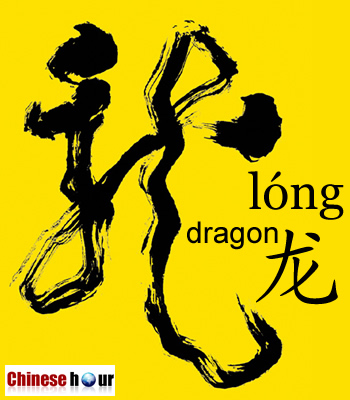
Chinese (Hanyu 汉 语, or Zhongwen 中 文), the language of the Han Chinese is spoken by most people in China. The term ‘Chinese’ is a generic term for the group of languages spoken by the Han Chinese people. The most important numerically is known as Mandarin or Northern Chinese, spoken by about 800 million people. It forms the basis of Putonghua or Modem Standard Chinese, the sort you bear on the radio, TV and most Chinese films from China itself. If you want to go to China, then this is by far the most useful to learn, and this article is mostly about learning Putonghua.
In Britain or USA, though, Cantonese is much more widely spoken amongst the Chinese community, because most Chinese families here have their roots in Hong Kong or other areas of South China where Cantonese is the main language. Cantonese is quite different from Putonghua in pronunciation and even grammar, although the written form of the language is the same (Chinese characters). People from the North who go to Canton sometimes have to resort to writing down what they mean in order to make themselves understood!
____________________________
Types of Chinese Characters
Thought to be the oldest types of characters, pictographs were originally pictures of things. During the past 5,000 years or so they have become simplified and stylised.
相形 Pictographs: Words formed from things which can be drawn (animal, person, object.)
指事 Indicatives: Words formed from things cannot be drawn (directions, numbers.)
会意 Ideatives: Words formed to be understood easily after the pictograph and indicatives were formed.
形声 Harmoics: Words formed with the fact taken as the basis for pronunciation in simile and add other signs or words to form a new word.
转注 Transmissives: Words that are under one heading and in the same idea are jointly receptive.
假借 Borrowed Eords: Words formed by taken from other word according to its sound and meanings that the original word is lacking.
________________________________________________________________
Learn to speak Mandarin? Learn to speak Chinese? Learn to speak Putonghua? I personnally recommend www.ChineseHour.com (中文时间, ChineseHour literally means the hour to learn Chinese) for you to give a flavour for the study of Chinese (Mandarin Chinese, putonghua). This fantastic Chinese learning site includes Chinese conversation class 24 hours every day 7 days a week, interactive self-paced courses, and references to online resources for learning Chinese.
WordPress database error: [Table './wordpress/wp_comments' is marked as crashed and last (automatic?) repair failed]
SELECT * FROM wp_comments WHERE comment_post_ID = '131' AND comment_approved = '1' ORDER BY comment_date